Showing posts with label Bible Difficulties. Show all posts

Saturday, February 13, 2021

Why Did I Become A Calvinist?

Image result for calvinist

George Whitfield said, “We are all born Arminians.” It is grace that turns us into Calvinists. - C.H. Spurgeon

When I was born-again in 1996, except for the gospel of Christ, I had zero knowledge of the Holy Bible. As I began to grow in the Lord, I got exposed to several doctrines. But no doctrine frustrated me like the doctrine of Calvinism.

I attended a church that didn’t believe in Calvinism. I studied in a Bible college that wasn’t in favor of Calvinism. My close friends were anti-Calvinists. Most of the books I cherished reading in my early Christian life were written by non-Calvinists.

I hated Calvinism. I mocked the Calvinists. When I heard or read some statements related to Calvinism, I gritted my teeth. I took delight in reading against Calvinism. I vehemently argued against Calvinism. I wasn’t merely a non-Calvinist but an anti-Calvinist. I considered Calvinism a great heresy in Christianity.

With such disposition against Calvinism, what compelled me to become a Calvinist?

I want to mention at the outset that I dislike using the term “Calvinist”. It seems to highlight Calvin and inflates the misbelief that he invented the doctrine of Calvinism. I prefer to use “Reformed view of soteriology” or “Doctrines of Grace.” But since many are unaware of these phrases, I am using “Calvinist” or “Calvinism” in this article. 

Two factors essentially led me to change my perspective on Calvinism.

1. THE HOLY SCRIPTURE

With hatred towards Calvinism, I was reading the Holy Bible every day. And as I read, I couldn’t resist God’s revelation in His Word concerning the doctrine of election. The first Scripture that shook me to the core was 1 Thessalonians 1:4.
For WE KNOW, brothers loved by God, THAT HE HAS CHOSEN YOU, BECAUSE our gospel came to you not only in word, but also in power and in the Holy Spirit and with full conviction. 
In this verse, I saw how Paul was certain (“we know”) that God had chosen the Thessalonians (“that He has chosen you”). How was he convinced about God’s election of them? Because the gospel transformed the lives of these Thessalonian believers ("because our gospel came to you not only in word, but also in power and in the Holy Spirit and with full conviction").

Observe, God didn’t choose them because they believed in the gospel. They believed in the gospel because God had chosen them. The gospel is effective only in the lives of God’s chosen ones.

Later I saw Acts 13:48 confirming this truth: “And when the Gentiles heard this, they began rejoicing and glorifying the word of the Lord, and as many as were appointed to eternal life believed.” Unconditional divine election preceded people’s belief in the gospel.

As I kept studying the Holy Scripture, I came across numerous scriptures affirming the “Doctrines of Grace”. Since this is an article and not a book, I am confined to brevity. Interested readers may look at these 10 Scriptures (there are a few more):
Matthew 11:27, “No one knows the Son except the Father, and no one knows the Father except the Son and anyone to whom the Son chooses to reveal him.”
 
John 17:1-2, “Father, the hour has come; glorify your Son that the Son may glorify you, since you have given him authority over all flesh, to give eternal life to all whom you have given him." (cf. v.6)
 
Acts 18:9-10, And the Lord said to Paul one night in a vision, “Do not be afraid, but go on speaking and do not be silent, for I am with you, and no one will attack you to harm you, for I have many in this city who are my people.”
 
John 5:21, "For as the Father raises the dead and gives them life, so also the Son gives life to whom he will."
 
Romans 8:30, "And those whom he predestined he also called, and those whom he called he also justified, and those whom he justified he also glorified.”

Ephesians 1:4-5, "even as he chose us in him before the foundation of the world, that we should be holy and blameless before him. In love he predestined us for adoption to himself as sons through Jesus Christ, according to the purpose of his will.” (see v.11)
 
Acts 2:39, "For the promise is for you and for your children and for all who are far off, everyone whom the Lord our God calls to himself.”
 
John 6:65, "No one can come to me unless it is granted him by the Father.
 
John 10:25-28, Jesus answered them, “I told you, and you do not believe. The works that I do in my Father's name bear witness about me, but you do not believe because you are not among my sheep. My sheep hear my voice, and I know them, and they follow me. I give them eternal life, and they will never perish, and no one will snatch them out of my hand."
 
Romans 9:14-16, "What shall we say then? Is there injustice on God's part? By no means! For he says to Moses, “I will have mercy on whom I have mercy, and I will have compassion on whom I have compassion.” So then it depends not on human will or exertion, but on God, who has mercy."
Finally, I couldn’t fight anymore against the revelation of God’s Word. The authority of God’s Word prevailed over my human, finite reasoning. I humbled myself, resisting my own sentimental assumptions, and yielded to the “Doctrines of Grace” (“Calvinism” or “Reformed View of Soteriology”). 
 
If not for the Holy Scripture, I would never have become a Calvinist. I am a Calvinist because Calvinism is based purely and solely on God’s Word. I now regret accusing Calvinism a heresy. It is the truth God’s Word plainly teaches.

2. REFLECTION ON MY CONVERSION 

The other triggering factor for me to become a Calvinist was my reflection on my own conversion experience.
 
I often say that if I was not converted by the gospel, I would have become either a criminal or a smuggler. I didn’t seek God. I hated attending the church. I was not too fond of the gospel when I heard it. I loved sinning and wallowed in it.
 
While being dead in sin, my life was drastically changed (still changing) by the gospel of Christ on June 26, 1996. And most surprisingly, I was born-again in the temple of Sai Baba. I have written in detail here how the gospel of Christ transformed my totally depraved life.
 
So when I reflected on my conversion experience, I didn’t understand how I chose to become a Christian. I was a terribly spoiled brat, bent on committing every evil possible. Personally cooperating with God as He worked in my heart to believe in Him (synergism) was an impossibility. I was good at rebellion against God and not at yielding to Him. 

Moreover, if it were a matter of man’s choice, my young neighbors were better than me to believe, having a good upbringing. But I was born-again, and all my decent, non-born-again religious neighbors were shocked by my transformation.
 
I eventually understood that I chose Christ because He first chose me before the foundation of the world. I sought Him because He first sought me. I came to Christ because the Father had drawn me to Him. I believed in Christ because He regenerated me.
 
I was neither better than my neighbors (in fact, I was worst) nor softened in my heart to believe in Christ. It was only the sovereign grace of God that awakened me to eternal life (monergism). Like Lazarus who came out of the tomb when the Lord called Him, I came out of the darkness into the light because God called me. Thus says God’s Word,
“And those whom he predestined he also called (effectual calling), and those whom he called he also justified, and those whom he justified he also glorified.” (Rom. 8:30)
Of course, each person’s lifestyle and conversion experiences are different. But the cause of all born-again believers is the same. And that cause is, "He chose us in him before the foundation of the world, that we should be holy and blameless before him. In love he predestined us for adoption to himself as sons through Jesus Christ, according to the purpose of his will.” (Eph. 1:4-5)
 
So the revelation of God’s Word and reflection over my own conversion experience have compelled me to become a Calvinist. I still wonder why God in His grace and mercy had chosen me, a depraved sinner. And I don’t have answers for some mysterious issues pertaining to God's sovereign work. Thus says the Scripture, “Oh, the depth of the riches and wisdom and knowledge of God! How unsearchable are his judgments and how inscrutable his ways!” (Rom. 11:33)
 
FINAL WORDS 

Before I close, I want to share a few thoughts. I subscribe to all the tenets of "Calvnism" or "Doctrines of Grace." But I must confess that Calvinism does not save people per se. The truth of the gospel—i.e. the death and resurrection of Christ for the reconciliation of sinners to God (1 Cor. 15:3-4)alone saves people.
 
Calvinism is the backdrop, which explains the sovereign work of God in and through the gospel. But the substance of the gospel is the death and resurrection of Christ Jesus. And only faith in the atoning sacrifice of Christ justifies a sinner before the Holy God (Rom. 5:1-2).  
 
So although I am strong in my convictions of Calvinism, my relationship with God’s children is based on the gospel of Christ. I am taught in Romans 15:7 to accept others just as Christ has accepted me (i.e through faith in the gospel). And I would love to engage in healthy discussions with others, sharing my biblical convictions for their consideration.
 
I consider all non-Calvinists born-again believers my brothers and sisters in Christ. And when we all get to heaven, we would behold things brighter than we perceive now. In the meantime, I plead with them to consider studying Calvinism, giving thought to its teaching. Many hold myths about Calvinism because they haven’t personally given themselves to diligent study, thereby possessing a partial and misconceived understanding of it.
 
Well, as a Calvinist who has a lofty view of God’s amazing grace, I am learning to grow in grace and truth, fighting against the arrogant and self-righteous attitude towards those who don’t hold my Calvinistic convictions. May God empower me to defend the Doctrines of Grace graciously.
 
Soli Deo Gloria!
 
Recommended book: Many good books are available on Calvinism. The one I would recommend is “Five Points” by John Piper. It is concisely written, precisely explained, and the PDF copy is available for FREE.
 
Calvinistic preachers and teachers who were a tremendous blessing to my Christian growth: Charles Spurgeon, Jonathan Edwards, John Owen, Martyn Lloyd-Jones, John Piper, John MacArthur, R C Sproul, Wayne Grudem, D.A. Carson, Steve Lawson, Steve Atkerson, Paul Washer, David Platt, Mark Dever, Voddie Baucham, Paul David Tripp and so forth.

___________________________

Enquiries: 

cstephendavid@gmail.com

Friday, April 3, 2020

Can We Claim 2 Chronicles 7:14 for God’s Healing of Nations from Covid-19?


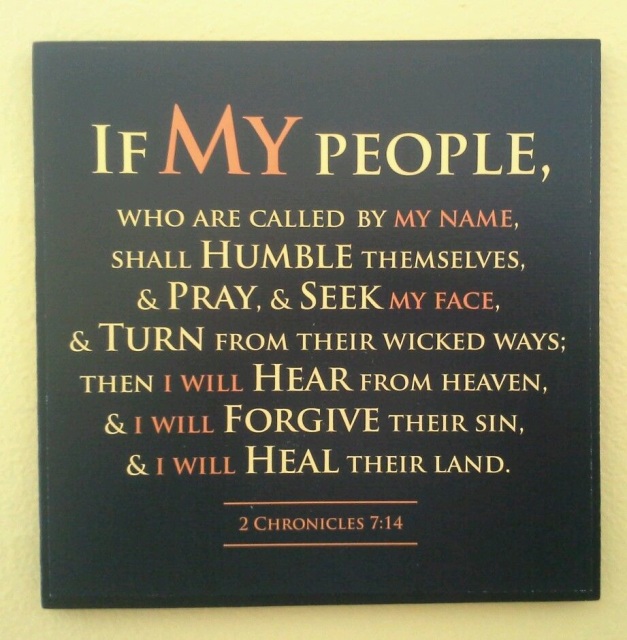
2 Chronicles 7:14 has become a great hallmark for revival. During the present Covid-19 crisis, many well-intentioned preachers are claiming 2 Chronicles 7:14 and calling the church to repentance. “If we humble ourselves, confess our sins and seek the Lord, then God would heal our land from coronavirus,” they proclaim.

Now it is always good to call the church to heart-searching repentance. It is necessary to pray to God to have mercy on us and deliver us from Covid-19. But can we claim the promise given in 2 Chronicles 7:14?

It is rightly said, “A text taken out of its context (the original situation into which it was spoken) is a pretext (a false reason that hides the true intent).” Let us see the context of 2 Chronicles 7:14 to refrain from faulty interpretation and application. This article is long but worth your time and attention.

WHAT IS THE CONTEXT?

After taking seven years to build the magnificent Temple in Jerusalem, Solomon offered the dedicatory prayer (2 Chro. 6:12-42). As soon as Solomon finished his prayer, the glory of the Lord filled the Temple (7:1-3). Then the Lord appeared to Solomon in the night and assured him that He had heard his prayers (7:12). He said to him,
When I shut up the heavens so that there is no rain, or command the locust to devour the land, or send pestilence among my people, if my people who are called by my name humble themselves, and pray and seek my face and turn from their wicked ways, then I will hear from heaven and will forgive their sin and heal their land. (7:13-14)
According to this Scripture, we must ask two questions.

WHERE TO PRAY?

Question One: According to 2 Chronicles 7:14, in which place did the Lord say He would answer the prayers? In which place did the Lord expect His people to pray and seek His face? To answer, we must go back to Solomon’s dedicatory prayer. Due to space constraints, I will only quote the words that require our attention.
2 Chro. 6:22-23, “If a man sins against his neighbor and is made to take an oath and comes and swears his oath before your altar IN THIS HOUSE, then hear from heaven…” 
2 Chro. 6:24-25, “If your people Israel are defeated before the enemy because they have sinned against you, and they turn again and acknowledge your name and pray and plead with you IN THIS HOUSE, then hear from heaven…” 
2 Chro. 6:26-27, “When heaven is shut up and there is no rain because they have sinned against you, if they pray TOWARD THIS PLACE and acknowledge your name and turn from their sin, when you afflict them, then hear in heaven…” 
2 Chro. 6:28-30, “If there is famine in the land, if there is pestilence or blight or mildew or locust or caterpillar, if their enemies besiege them in the land at their gates, whatever plague, whatever sickness there is, whatever prayer, whatever plea is made by any man or by all your people Israel, each knowing his own affliction and his own sorrow and stretching out his hands TOWARD THIS HOUSE, then hear from heaven…” 
2 Chro. 6:32-33, “Likewise, when a foreigner, who is not of your people Israel, comes from a far country for the sake of your great name and your mighty hand and your outstretched arm, when he comes and prays TOWARD THIS HOUSE, hear from heaven…”= 
2 Chro. 6:34-35, “If your people go out to battle against their enemies, by whatever way you shall send them, and they pray to you TOWARD THIS CITY THAT YOU HAVE CHOSEN AND THE HOUSE THAT I HAVE BUILT FOR YOUR NAME, then hear from heaven…” 
2 Chro. 6:36-39, “If they sin against you—for there is no one who does not sin—and you are angry with them and give them to an enemy, so that they are carried away captive to a land far or near…if they repent with all their heart and with all their soul in the land of their captivity to which they were carried captive, and pray TOWARD THEIR LAND…then hear from heaven…”
Do you observe the phrases "in this house" "toward this place" "toward this house" and “then hear from heaven”? What is the place in which Solomon pled with God to answer? It is solely in the Temple at Jerusalem. Every petition that Solomon made was connected to the prayers offered at the Temple he built.

In 2 Chronicles 7:14, when the Lord said if they humble themselves and pray, it is in the Temple or toward the Temple of Jerusalem. Solomon acknowledged that this place was chosen by God Himself, “the city that you have chosen and the house that I have built for your name” (6:38).

Immediately after 7:14, the Lord said in verse 15, “Now my eyes will be open and my ears attentive to the prayer that is made IN THIS PLACE. For now I HAVE CHOSEN AND CONSECRATED THIS HOUSE that my name may be there forever. My eyes and my heart WILL BE THERE for all time.” The humbling of the people of Israel and their praying and seeking the Lord was at the Temple that Solomon built.

Bear in mind that there was only One Temple in Jerusalem where people offered prayers and sacrifices. That was God’s chosen place in the Old Covenant. If we apply 2 Chronicles 7:14, then we must offer prayers in the Temple of Jerusalem, for that’s what the text meant. Unfortunately, there is currently no Temple in Jerusalem but the Islamic shrine “The Dome of the Rock” located on the Temple Mount.

Caution is required here that church buildings are not the Jerusalem Temple. Many falsely attribute church buildings to God's physical Temple by misinterpreting Old Testament Scriptures. To be sure, according to 1 Corinthians 3:16, it is not the church buildings but the church (God’s people) which is God’s Temple.

But 2 Chronicles 6-7 exclusively mentions the physical Temple in Jerusalem where God answered the prayers offered by the Israelites. It has no relevance to God’s New Covenant people. The discontinuity from the old pattern of prayers and worship was answered by the Lord Jesus Himself, which He spoke to the Samaritan woman:
Woman, believe me, the hour is coming when neither on this mountain (where Samaritans worshipped) nor in Jerusalem (where Jews worshipped on the Temple Mount) will you worship the Father.....But the hour is coming, and is now here, when the true worshipers will worship the Father in spirit and truth, for the Father is seeking such people to worship him. God is spirit, and those who worship him must worship in spirit and truth. (John 4:21, 23-24)
 WHICH LAND GOD PROMISED TO HEAL?

Question Two: What is the land that the Lord said He would heal? 
2 Chronicles 7:13-14, “if my people who are called by my name humble themselves, and pray and seek my face and turn from their wicked ways, then I will hear from heaven and will forgive their sin and heal their land." 
Observe the phrase “heal their land.” Whose land? The land given to the nation of Israel. The Lord promised to Abraham centuries ago, “To your offspring I will give this land” (Gen. 12:7; 15:18; 17:8). This land is the land of Canaan, a land flowing with milk and honey. 

Centuries later, when the Israelites were held in the bondage of Egypt, the Lord appeared to Moses and said, “I have come down to deliver them out of the hand of the Egyptians and to bring them up out of that land to a good and broad land, a land flowing with milk and honey, to the place of the Canaanites…” (Exo. 3:8). 

After their deliverance from the bondage of Egypt, when the Israelites were wandering in the wilderness, the Lord spoke to them about blessings for obedience to the Law and curses for disobedience to the Law (Deut. 28-30).

The blessings include rich harvest and abundant rain, and victory over enemies in the land in which they would live (28:1-14). The curses include famine, pestilence, defeat by their enemies, eventually losing their land and going into captivity (28:15-28). But if people repent of their sins and turn to the Lord, God said He will bring them into the "promised land" and prosper them again (30:1-10).

So the prayer that Solomon offered in his dedication of the Temple in 2 Chronicles 6 was in accordance with God’s promise of blessings and curses and restoration written in Deuteronomy 28-30. And the assurance that God gave to Solomon in healing their land as a result of His people’s repentance was based on His promise of restoration in Deuteronomy 30. This healing of the land in 2 Chronicles 7:14 is concerning the curse the Lord would bring on the land, "When I shut up the heavens so that there is no rain, or command the locust to devour the land, or send pestilence among my people" (7:13).

When the Lord brought out the Israelites from the bondage of Egypt, He made them a distinct and theocratic nation, gave them the Law (613 laws) by which they must abide, and brought them into the land of Canaan where their prosperity and adversity was dependent on their obedience and disobedience.

In contrast, the church is not a theocratic nation. We are God’s people living in secular countries. The church is not under the Mosaic Law. The covenant that the Lord made to Israel, the several blessings for obedience to the Law and curses for disobedience to the Law, does not apply to the church because we are under the New Covenant, under the Law of Christ (1 Cor. 9:20-21).

Do you know that even the present Israel cannot claim 2 Chronicles 7:14 because their blessings and curses are now based on their faith and rejection of the Lord Jesus Christ? They are no more called to live under the Mosaic Law with its blessings and curses. They are called to repent and believe in the Gospel of Christ and live under the New Covenant.

2 CHRONICLES 7:14

Therefore, in 2 Chronicles 7:13-14,

“When I shut up the heavens so that there is no rain, or command the locust to devour the land, or send pestilence AMONG MY PEOPLE,” speaks about the disasters God sends among His covenant people because of consistently breaking His Law. Only God’s people (i.e. the Jews) are in view here. This text doesn’t speak about God sending these disasters on Gentile nations.

“if my people who are called by my name humble themselves” speaks about the nation of Israel (who are called by God’s Name) humbling themselves before the Lord. This text doesn’t speak about individuals or a small group of people praying to the Lord, but the nation of Israel. This text doesn’t even speak about repenting on behalf of the nation but the nation itself repenting before the Lord.

“and pray and seek my face” speaks about the Israelites offering their prayers in or toward the Temple of Jerusalem.

“and turn from their wicked ways” speaks about the Israelites turning away from their disobedience to the Mosaic Law.

“then I will hear from heaven and will forgive their sin and heal their land” speaks about the restoration of or to the "promised land", the land flowing with milk and honey. The land here is the land promised to Israel and not any other lands.

When you consider all these issues within the immediate and broader context of 2 Chronicles 7:14, do you suppose you can claim it for our present Covid-19 crisis? Did the disaster come only on God's people? Are we as a whole nation repenting before the Lord? Is our land the "promised land" given to the Israelites in fulfillment of the Abrahamic covenant? Are we praying and seeking the Lord in the Temple of Jerusalem?

CONCLUSION

Well, does all this mean that we learn nothing from 2 Chronicles 7:14? Not at all! We cannot claim its promise literally, but we can learn some good principles from it. We learn about God’s goodness, holiness, faithfulness, and grace manifested toward His people. We grasp how humble repentance is pleasing to the Lord. We observe how broken and contrite spirit moves the heart of God to forgive and accomplish His purposes in His community. The Book of James exhorts:
Draw near to God, and he will draw near to you. Cleanse your hands, you sinners, and purify your hearts, you double-minded. Be wretched and mourn and weep. Let your laughter be turned to mourning and your joy to gloom. Humble yourselves before the Lord, and he will exalt you. (4:8-10)
But can we claim 2 Chronicles 7:14 as a promise to apply to our current crisis, that is, if the Church repents, God will heal the nations? No, we cannot. The call to repentance with a promise of healing of the land was given to God’s Old Covenant people, the Israelites, who lived under a different dispensation. We, the church, are under the New Covenant, and are neither a political nation nor do we own a particular land as a nation.

In the Old Covenant, the Israelites had a physical Temple where God's presence dwelt, sacrifices of animals were offered on the altar, and Levitical priests were the mediators between God and people. They were also given the Law with blessings and curses in the "promised land" they lived. If they obeyed the Law, they prospered in the land. If they disobeyed the Law, the people and the land were cursed. And if they repented of their sins against God, the Lord healed their land.

Considering the New Covenant, Christ Jesus has become our sufficient and ultimate sacrifice for our sins (Heb. 10). Through Him, we have direct access to God (Heb. 4:14-16). Through Him, both Jews and Gentiles have become one people of God (Eph. 2:13-16). Through Him, we have become the Temple of God (Eph. 2:21-22). Through Him, we have become royal priests of God (1 Pet. 2:9). Through Him, we are no longer under the curse of the Law of Moses (Gal. 3:10-14). Through Him, if we confess our sins, we are cleansed from all unrighteousness (1 John 1:7,9) What's more, through Him, we inherit God's eternal Kingdom (Eph. 1:13-14). Hallelujah!

Remember that we cannot randomly claim the Old Testament promises, particularly when they were given to God’s Old Covenant community, i.e. Israel, under a different dispensation. The blessings and promises given to the church in Christ Jesus are incomparably greater (Read Ephesians chapter 1).

Finally, although it is inappropriate to claim the promise of 2 Chronicles 7:14, can we pray in general for God’s mercy and plead with Him to heal the nations from Covid-19? Sure! Much prayers must rise at the moment to the Throne of Grace for God’s deliverance from Coronavirus. We must also pray that the Lord would use the Covid-19 crisis to awaken unbelievers to remind them of their mortality and insecurity in the world, and show them the greater need of salvation found only in Christ.

We must likewise pray for the local churches that the Lord would use the current plight to bring spiritual awakening and deliver them from lukewarmness. We must pray that the Church would remain faithful in the proclamation of the Gospel of Christ, because real healing of the nation can only come through individuals turning from their sin to Christ. Without the preaching of the Gospel and without people experiencing the forgiveness of sin found in and through Christ, true healing cannot come to the nations.
___________________________

Enquiries: 

messageforourage@gmail.com

Friday, April 21, 2017

Does God Hate Sin and Not the Sinner?


There is a widespread sentiment in Christian circles: “God hates sin but loves the sinner; He doesn’t hate sinners.” How good it sounds to hear God does not hate sinners, only their sin! There are some popular notions in Christian culture that many have naively accepted without examining them in the light of Holy Scripture, for they carry great appeal to man's self-indulgent emotions.

Let us first examine this statement logically—can sin occur without an individual’s choice? We know that sin is an outcome of a person’s will. When one chooses to sin, how can God just hate the sin and not the individual who chose the sin? It is like telling about the murderer who killed your child that you hate the murder and not the murderer. Crime does not exist without a criminal. Sin is not committed without a sinner.

Besides, if God loves the sinners but hates only the sin, can we also inverse the statement and say, “God loves the good deed but He does not love the doer of the good deed?” It doesn’t make sense, right? Just as good reflects the goodness of the one who did the good deed, so sin reflects the vileness of the sinner.

The Holy Bible does reveal that God loves sinners: “But God demonstrates his own love for us in this: While we were still sinners, Christ died for us” (Rom. 5:8). And the Holy Scripture also declares that God hates sinners: “The arrogant cannot stand in your presence; YOU HATE ALL WHO DO WRONG” (Ps. 5:5).

Observe, He not only hates the wrong, but also those who do wrong. God loves and hates sinners. Reformed evangelical theologian and professor of the New Testament, D. A. Carson, comments:
The cliché (God hates the sin but loves the sinner) is false on the face of it, and should be abandoned. Fourteen times in the first fifty psalms alone, the psalmists state that God hates the sinner, that His wrath is on the liar, and so forth. In the Bible the wrath of God rests on both the sin (Rom. 1:18–23) and the sinner (1:24–32; 2:5; John 3:36).
Well, a question may arise, “How can God love and hate the sinner at the same time?” This is a paradox. French theologian and Protestant Reformer, John Calvin, writes about God that “in a marvelous and divine way he loved us even when he hated us.”

The Holy Bible teaches that God is holy and God is love (1 Peter 1:16; 1 John 4:7-8).  God hates sinners because He is holy and righteous, abhorring sins they commit; and He loves them still because He is loving and gracious, manifesting His mercy towards them. Both the holy and loving attributes are manifested in God’s perfect nature.

All men deserve God’s wrath because of their sin. No one deserves His love. His grace is amazing towards the sinners because He loves those who indeed deserve His wrath, and had His Only Son to die for them and save them from His wrath. Blessed be His Glorious and Gracious Name.
"Whoever believes in the Son has eternal life; whoever does not obey the Son shall not see life, but the wrath of God remains on him." (Jn. 3:36)
Note: This article is an excerpt from the book "Signs of Salvation: Understanding Authentic and Counterfeit Conversion" by C. Stephen David. Click on the following image to find more details.


___________________________

Enquiries: 

messageforourage@gmail.com

Friday, September 16, 2016

What’s So Great a Difference Between the OT Ten Commandments and the NT Commandments?


The New Testament Scriptures for Reflection: The beloved disciple of Christ Jesus, John, wrote, “For this is the love of God, that we keep his commandments. And his commandments are not burdensome” (1 Jn. 5:3). The Lord Jesus Himself said, “Whoever has my commandments and keeps them, he it is who loves me” (Jn. 14:21).

--------------------

In the Old Testament, God’s people were obligated to keep the Ten Commandments (Exo. 20). In fact, they were required to keep the whole law (Gal. 5:3). I specifically mention the Ten Commandments because they are reflected in the New Testament, especially in the letters written to the young churches.

What may come to our mind is, when both the OT and NT have commandments on moral issues, what’s so great a difference between the OT Ten Commandments and the NT commandments? I will present five great differences for your consideration.

1. Cross

In the Old Testament, the law was given to Israel to expose the knowledge of sin and to show the depravity of man’s heart, ultimately leading people to Christ in order to be justified by faith, not by works (Gal. 3:24). The Gentiles had their own law written on their hearts, which they themselves could not keep (Rom. 2:12-16). Whether Jews or Gentiles, all have sinned and are in need of the redemption that is in Christ Jesus (Rom. 3:22-25).

Considering the Law of Moses, Paul argues in Romans 3:20, “For by works of the law no human being will be justified in his sight, since through the law comes knowledge of sin.” The law is good, but since no one can keep the law in its entirety, none can be justified before God’s sight. In other words, the law was given to show our impotency in following it and our need for God’s grace.

Now, when it comes to the New Testament, the commandments were given, not to prove our impotency, but having found our sufficiency in Christ, we obey them. Because of the redeeming power of the Lord Jesus from the bondage of sin, we can say, “We keep His commandments. And His commandments are not burdensome” (1 Jn. 5:3).

Paul wrote that God “saved us and called us to a holy calling” (2 Tim. 2:9). Observe the order—God has first saved us through Christ’s sacrifice on the cross and then called us to a holy living. We can live holy because we are saved from the penalty and power of sin through the cross of Christ.

Besides, we do not keep the commandments of God to find our acceptance by Him. We are accepted by God only because of the sacrificial work of Christ Jesus on the cross for the forgiveness of our sins (Rom. 5:1). Nothing that we do causes God to accept us. Everything that we do flows out of our acceptance by God in Christ Jesus.

2. Christ Jesus

What is the source of OT law? Revelation through Moses. John writes, “For the law was given through Moses” (Jn. 1:17). Paul also mentioned, “Yes, to this day whenever Moses is read (i.e. a metaphor for the Law) a veil lies over their hearts” (2 Cor. 3:15).

But, what is the source of New Testament commandments? The Lord Jesus Christ. After mentioning to believers to abstain from sexual immorality, drunkenness, quarrelling and jealousy, Paul wrote, “But put on the Lord Jesus Christ, and make no provision for the flesh, to gratify its desires” (Rom. 13-14). We are called to imitate Christ, and all our obedience to the commandments in the New Testament is with a purpose, i.e. to be conformed to Christlikeness. (1 Jn. 2:6; Rom. 8:29)

Although there are similarities between the Ten Commandments mentioned in Exodus 20 and the New Testament commandments in the letters to the churches, the point of reference is Christ, not Moses. We put on Christ, not Moses. Christ Jesus is our absolute source and standard (not Moses) for obedience to New Testament commandments. Paul elsewhere mentions that he is not under the law of Moses, but under the law of Christ (1 Cor. 9:20-21).

3. Grace

John wrote, “For the law was given through Moses; grace and truth came through Jesus Christ” (Jn. 1:17). Do you know that God’s grace in the Old Testament law was manifested only to some extent, but His grace is extensively shown in the New Testament?

For example, the fourth commandment in the Ten Commandments says to keep the Sabbath day holy (Exo. 20:8). And anyone who does not keep the Sabbath day, it is commanded that they must be put to death (Exo. 31:14). The seventh commandment in the Ten Commandments says not to commit adultery (Exo. 20:14). And anyone who commits adultery, it is commanded they must be put to death (Lev. 20:10).

Thankfully, in the New Testament, we have been given abundant grace in Christ for the forgiveness of our sins. It is written, “If we confess our sins, he is faithful and just to forgive us our sins and to cleanse us from all unrighteousness” (1 Jn. 1:9). There is no sin that cannot be forgiven, for “the blood of Jesus his Son cleanses us from ALL sin” (1 Jn. 1:7). This shows a radical shift in God’s administration of His grace.

Having said that, this does not mean one can casually commit any sin and simply seek God’s forgiveness. Those who are truly born-again love righteousness; they hate sin and wickedness (1 Jn. 2:29). And in their pursuit of righteousness, whenever they fall in sin, there is forgiveness for them in Christ Jesus and freedom from self-condemnation (1 Jn. 2:1-2).

4. Divine Empowerment

The OT law was kept by one’s own effort. Paul explained his struggle to keep God’s law in this way:
For I do not understand my own actions. For I do not do what I want, but I do the very thing I hate. Now if I do what I do not want, I agree with the law, that it is good. So now it is no longer I who do it, but sin that dwells within me. (Rom. 7:15-17)
Finally, after Paul asking “Wretched man that I am! Who will deliver me from this body of death?” he expresses, “Thanks be to God through Jesus Christ our Lord!” (Rom. 7:24-25). He then goes on in chapter 8 explaining how sin is mortified (put to death) by the power of the Holy Spirit.

As New Covenant believers, none of us can obey the commandments by our own effort. It requires divine empowerment. All our efforts flow out of divine empowerment by God. Observe the Lord’s New Covenant:
And I will give you a new heart, and a new spirit I will put within you. And I will remove the heart of stone from your flesh and give you a heart of flesh. And I will put my Spirit within you, and cause you to walk in my statutes and be careful to obey my rules. (Eze. 36:26-27; cf. Jer. 31:33)
Moreover, God's Word says, “His divine power has granted to us all things that pertain to life and godliness” (2 Pet. 1:3). The divine power has been given for godliness. A Christian, therefore, is not impotent for holiness. He is empowered by the Holy Spirit. He is mighty in the Spirit.

Because of the power that is in believers to live a godly life, the Word of God teaches, “Walk by the Spirit, and you will not gratify the desires of the flesh” (Gal. 5:16). And, “For if you live according to the flesh you will die, but if by the Spirit you put to death the deeds of the body, you will live” (Rom. 8:13).

The Christian life is not lived by just rules and principles; it is a Spirit-empowered life. The Puritan John Owen, recognizing a believer’s utter dependence on the Spirit, wrote, “A man may easier see without eyes, speak without a tongue, than truly mortify one sin without the Spirit.” Believers are called to live a holy life not by self-confidence and self-help, but by the Spirit’s enablement. No power, no purity.

5. Love

When the question was asked to Christ Jesus about which is the great commandment in the Law, the Lord said:
You shall love the Lord your God with all your heart and with all your soul and with all your mind. This is the great and first commandment. And a second is like it: You shall love your neighbor as yourself. (Matt. 22:37-39)
Paul also wrote:
Owe no one anything, except to love each other, for the one who loves another has fulfilled the law. For the commandments, “You shall not commit adultery, You shall not murder, You shall not steal, You shall not covet,” and any other commandment, are summed up in this word: “You shall love your neighbor as yourself.” Love does no wrong to a neighbor; therefore love is the fulfilling of the law.
Observe, such emphasis and enlightenment on love is not emphasized in the OT law. It is in Christ Jesus that love was absolutely manifested towards us, and thus love was highlighted as a motivation for our complete obedience to the New Testament commandments. 

For this reason, Christ gave a new commandment, "A new commandment I give to you, that you love one another: just as I have loved you, you also are to love one another" (Jn. 13:34).

Further, the phrase “Love one another” is repeated at least a dozen times in the New Testament (Jn. 13:34; 15:9, 12, 17; Rom. 13:8; 1 Thess. 4:9; 1 Pet. 1:22; 1 Jn.3:11, 23; 4:7, 11-12; 2 Jn. 5). And you will find more than one hundred New Testament references on love, not to mention the detailed description of love in 1 Corinthians 13.

The whole Christian life is a life of love. All the commandments are obeyed out of love for God and for others. So important is love in a believer that it is written:
By this it is evident who are the children of God, and who are the children of the devil: whoever does not practice righteousness is not of God, nor is the one who does not love his brother. (1 Jn. 3:10)
Final Words

We have learned that despite the fact of having similarities between the OT Ten Commandments and the New Testament commandments, except the controversial issue on the relevance of Sabbath which requires separate treatment, there is a great difference between them. The following is the summary:

1. Our Christian obedience is built on the cross of Christ Jesus, which is the basis for our acceptance by God and justification before His sight.

2. Our Christian obedience has its point of reference to the person Christ Jesus. It is the Lord Jesus, not Moses, who is our source and standard.

3. Our Christian obedience has the riches of God’s grace available to us in Christ Jesus. Whenever we fail in our obedience, we don’t have to fall in self-condemnation or fear of losing our salvation. Instead, we must sincerely repent of our sin, receive forgiveness in Christ Jesus, and move forward in our growth in Christlikeness.

4. Our Christian obedience is practiced not by self-effort, but by Spirit-enablement. Although our responsibility in putting our effort is exhorted, all our energy flows out of God’s powerful work in us.

5. Our Christian obedience is manifested out of love for God and for one another. The love of God in our hearts is the motivation for all our obedience to New Testament commandments. We do not obey because we “have to” but because we “love to.”

May the Lord continue to shower His grace and power on us to live a life of obedience to His commandments for His glory, honor and praise.
_________________________________________

Enquiries: 

cstephendavid@gmail.com 

(or)


messageforourage@gmail.com

Saturday, July 7, 2012

Why Did God put the Tree of the Knowledge of Good and Evil? - Part 3

  3 of 3

Should Abuse Lead to No Use?
Let me pose few questions for your consideration. Is it fair to stop manufacturing vehicles just because of the accidents? Is it wise to cease using fire just because of the fire accidents? Is it reasonable to end using electricity just because of electrocutions? We all well understand that it is unwise to completely discard something which is so good and helpful just because of the possibility of bad. Someone rightly said, “The remedy for misuse is not disuse but right use.”

Likewise, God did not stop to create man as a free being because of the potentiality to abuse his freewill. If man could do bad because of the abuse of free will, He could not even do good voluntarily without the right exercise of his moral freedom. Despite the risk involved in misusing the freedom, God had still created man as a morally free being. Although there are those who choose evil and grieve Him, God’s ultimate delight is in those who freely choose to love and obey Him. Is it not a risk worth taking for at least the few who voluntarily and joyfully choose to obey?

Allow me to share few more instances to clarify the dilemma. We hear a lot of crime reports on the news. There are times I have read and heard how people murder others for money. Not even once did I hear anyone grumbling and accusing the person who had invented gun or knife. The natural accusation was on the murderer who was greedy and inhuman.

I wonder, why then many accuse God for keeping the tree of the knowledge of good and evil when it is man who should be blamed for abusing his free will!

Moreover, is it fair to blame the educational institutions for having grading system just because of some folks committing suicide for failing in exams? And what about sex? How many people are dying because of HIV/AIDS! Shall we stop having sex because of these deadly and incurable diseases? Think—is the problem truly with sex itself or with the misuse of sex?

Therefore, why is God held responsible for evil when it is man who abuses his freewill to do evil? Does the real problem lie with God who has given freewill or with man who abuses his freewill? You know, sin is nothing but the abuse of freewill God has given to man. And God created us in such a way so that we can rightly exercise our freedom of choice and become like Mother Teresa or abuse our freewill and become like Adolf Hitler.

Final Words
I have nothing but appreciation for God’s marvellous creation. He didn’t create us as robots nor did He manipulate our freedom. He created us in His own image, i.e. as volitional, relational, rational and moral beings, so that we would reflect His glory. God made man as a free being, i.e. with an ability to make moral choices. In consideration of this fact, there is no created thing on earth as beautiful and wonderful and mysterious as mankind. David rightly expressed, "I praise You because I am fearfully and wonderfully made; Your works are wonderful, I know that full well." (Ps. 139:14)

Well, the goodness of God is that, even though man disobeyed God and sinned against Him by abusing his freewill, He didn't give up on man to face his own eternal destruction. Here is the good news: "For God so loved the world that He gave His only begotten Son [Jesus Christ], that whoever believes in Him shall not perish but have eternal life" (Jn. 3:16).

Therefore, I urge people to cease blaming God for putting the tree of the knowledge of good and evil, and rather repent of their sins and gratefully accept the gift of forgiveness given through Christ Jesus, who is the one and the only in the history of the world who died on the cross and rose again from the dead to give hope to the perishing world. [go to first page] |  3 of 3
_______________________________

Enquiries: 


cstephendavid@gmail.com (or) stephen@tents-india.org

Why Did God put the Tree of the Knowledge of Good and Evil? - Part 2


Freedom of Choice
We have seen that man was created as a morally free being, which means, man is free to obey and disobey the standards of God. To exercise his moral freedom, God should not withhold man the choice of disobeying Him. After all, what is that freedom to obey if there is no freedom to disobey? Such freedom would be superficial and unreasonable.

For this reason, God presented before man the alternative to disobey His command by putting the tree of the knowledge of good and evil. Interestingly, God has forbidden only one thing while giving man all the freedom to do other things. Is it fair to still accuse God because of this one forbidden thing which he has put before man? Doesn't this show how ignorant we are about God’s holy nature and the nature of design of man’s creation?

If God had not created man as a morally free being without freedom to disobey Him, He would still be accused of being a hypocrite or a manipulator, for He had created man as a morally free being without any choice to exercise his moral freedom. Norman Geisler rightly pointed out that "forced love is rape; and God is not a divine rapist. He will not do anything to coerce their decision."

If this sounds logical, why is God blamed for putting the tree of the knowledge of good and evil, without which it doesn’t make any sense that man is morally a free being to choose that which is right or wrong?

See how fair God was in His creation of man:
  • God created man as a morally free being with a choice to do right or wrong. Indeed, when Adam was created, he was fully upright, having left with a choice either to continue in his uprightness or to turn to wickedness. It is written, “God made mankind upright, but men have gone in search of many schemes” (Ecc. 7:29).
  • God created man and gave him the freedom to eat anything but also warned him not to eat the fruit from the tree of the knowledge of good and evil. He said, “You are free to eat from any tree in the garden; but you must not eat from the tree of the knowledge of good and evil” (Gen. 2:16-17a)
  • God not only forbade man not to eat fruit from the forbidden tree but also cautioned him of the consequence if he goes against His command. He said, “For when you eat of it you will surely die” (Gen. 2:17b).
You see, man did not fall in sin out of ignorance or out of compulsion; he was in complete knowledge of what he was supposed to do and what he shouldn’t. He made the choice consciously and voluntarily. Therefore, God was perfectly fair in the way He created man, giving him the complete freedom to enjoy everything around him and also warning him of the consequence of choosing to go against His will.

Risky Gift of Free Will
Now, I can imagine some raising this question—when God already knew that man would disobey Him, why should He still put the tree of the knowledge of good and evil?” Good question! Let us give a careful thought to this point.

God did not give man the freedom just for the sake of freedom—it is to love, to obey and to do good. Paul E. Little wonderfully describes the necessity of freedom to love in the following way:
How would you like to be married to a chatty doll? Every morning and every night you could pull the string and get the beautiful words, “I love you”. There would never be any hot words, never any conflict, never anything said or done that would make you sad! But who would want that? There would never be any love, either. Love is voluntary. God could have made us like robots, but we would have ceased to be men. God apparently thought it worth the risk of creating us as we are. [Know Why You Believe, pg. 87]
I take great delight when my children obey, for they choose to do voluntarily. I don’t take the same delight in my computer which does what I command with my figures, for it is just a lifeless system playing as I wish. Fortunately, man was not created like this lifeless system. He has been created in a mysterious way to do things voluntarily. Although trees and animals are also animate things, man is marvelous and unique above all earthly creation because of the moral freedom he has and the creative way he functions.

Of course, there is a risk involved in this freewill: The more freedom man has to obey means the more freedom he has even to disobey. J. B. Phillips put it so well, "Evil is inherent in the risky gift of free will.” But just because of the negative consequences that man would face due to the abuse of His free will, should it stop God from creating him as a morally free being, especially if He truly loves us and expects us to wholeheartedly love Him and one another? [continued next page...] | 2 of 3

Why Did God put the Tree of the Knowledge of Good and Evil? - Part 1


The LORD God took the man and put him in the Garden of Eden to work it and take care of it. And the LORD God commanded the man, "You are free to eat from any tree in the garden; but you must not eat from the tree of the knowledge of good and evil, for when you eat of it you will surely die." (Genesis 2:15-17)
One of the most asked questions, by both Christians and non-Christians, doubting the goodness and the wisdom of God, is this—“Why did God put the tree of the knowledge of good and evil in the garden of Eden?”

Looks like if there is any person who is blamed more than anyone else—He is God. The dilemma about the existence of the tree of the knowledge of good and evil has troubled many, thereby accusing God of being unfair. Some even take this as an excuse to disbelieve in the God of the Holy Bible. By the way, if someone doesn't want to believe in God, he cannot be convinced by any reasons, however reasonable; he still clings to excuses to disbelieve. But anyone who wants to believe in God, provided that he finds honest answers, such a person is not far from the truth and understanding about God.

Therefore, I urge the reader to give careful thought to the following reasons, guarding oneself from being emotionally judgmental.

Knowing the Nature of God
Before we go further, I believe it is quite significant to comprehend the nature of God. Most of our misconceptions are the result of our ignorance about the right knowledge of God or our refusal to believe who He is and what He claims to be. To share briefly, the following is what the Holy Bible reveals about who God is:
  • The LORD is upright...there is no wickedness in Him. (Ps. 92:15)
  • The Lord is righteous in all His ways. (Ps. 145:17)
  • God is light [holy]; in Him there is no darkness [unholiness] at all. (1 Jn. 1:5)
  • His [God's] works are perfect, and all His ways are just. A faithful God who does no wrong, upright and just is He. (Deut. 32:4)
  • What then shall we say? Is God unjust? Not at all! (Rom. 9:14)
We learn from the Holy Scripture that God’s nature is perfect. He does no wrong. All His ways are upright. As the theologians say—He is impeccable and infallible. So, it is important to note that if our foundational knowledge about the nature of God and His attributes is imperfect, we often misconstrue and misinterpret the just works of God.

Understanding the Purpose of Man’s Creation
Another crucial thing to understand is about the purpose of man’s creation. Man is God’s unique creation. He has been created for the glory of God as a morally free being. For this reason, man is concerned about virtues like goodness, kindness, love and justice against vices like pride, hatred, corruption and illegalities, although there are differing opinions about how these are exercised.

We don’t find animals thinking, desiring, discussing and debating about such virtues and vices. We don’t have laws for animals and neither do we put them behind the bars for breaching them. But we hold man responsible and accountable for his actions, for he is created by God as a morally free being, though sadly he is now in a fallen state and unable to live a morally perfect life.

Now think about these questions:

1) When God made man as a morally free being, should He not give him the freedom to live a moral life? Don't you think that the fact about God creating man as a moral being by default requires freedom?

2) If God should give man the freedom, should He not give him the freedom of choice to obey Him, which also means a choice to disobey Him? Remember, God did not create man as merely a free being, like animals; He created man as a morally free being, giving him moral standards against immoral acts. And what is that moral freedom if there is no choice involved either to obey or disobey?

3) If God must give man the freedom to obey or disobey Him, should He not provide him the opportunities to make such choices voluntarily and without coercion?

Without the above elements, don’t you suppose man would not be a morally free being, but simply a robot—thinking, feeling and acting by a fixed system, not by voluntary choices? The very fact that we question about God—His goodness and wisdom in putting the tree of the knowledge of good and evil—shows that we are free beings with voluntary choices, either to trust Him or to disbelieve Him. People have the freedom either to love or to hate, to accept or to despise God because of this freedom.

And here is a last question to think about:

4) If God ought to give man the freedom to voluntarily choose to obey or disobey His standards, then man is morally responsible for his actions. So, should there not be consequences for making moral choices—rewards for obedience and punishment for disobedience? Or else, does it make any sense whether we obey or disobey?

Indeed, the question about why God put the tree of the knowledge of good and evil comes because of the pathetic consequence man had to face because of his choice to eat the forbidden fruit from this tree. [continued next page...] |  1 of 3